Tow truck guide
Tow Truck Dispatch: What Information Speeds Up Service
Practical Ottawa driver guide for tow truck service, including safety steps, dispatch details, service options, and when to call Ottawa Towing.
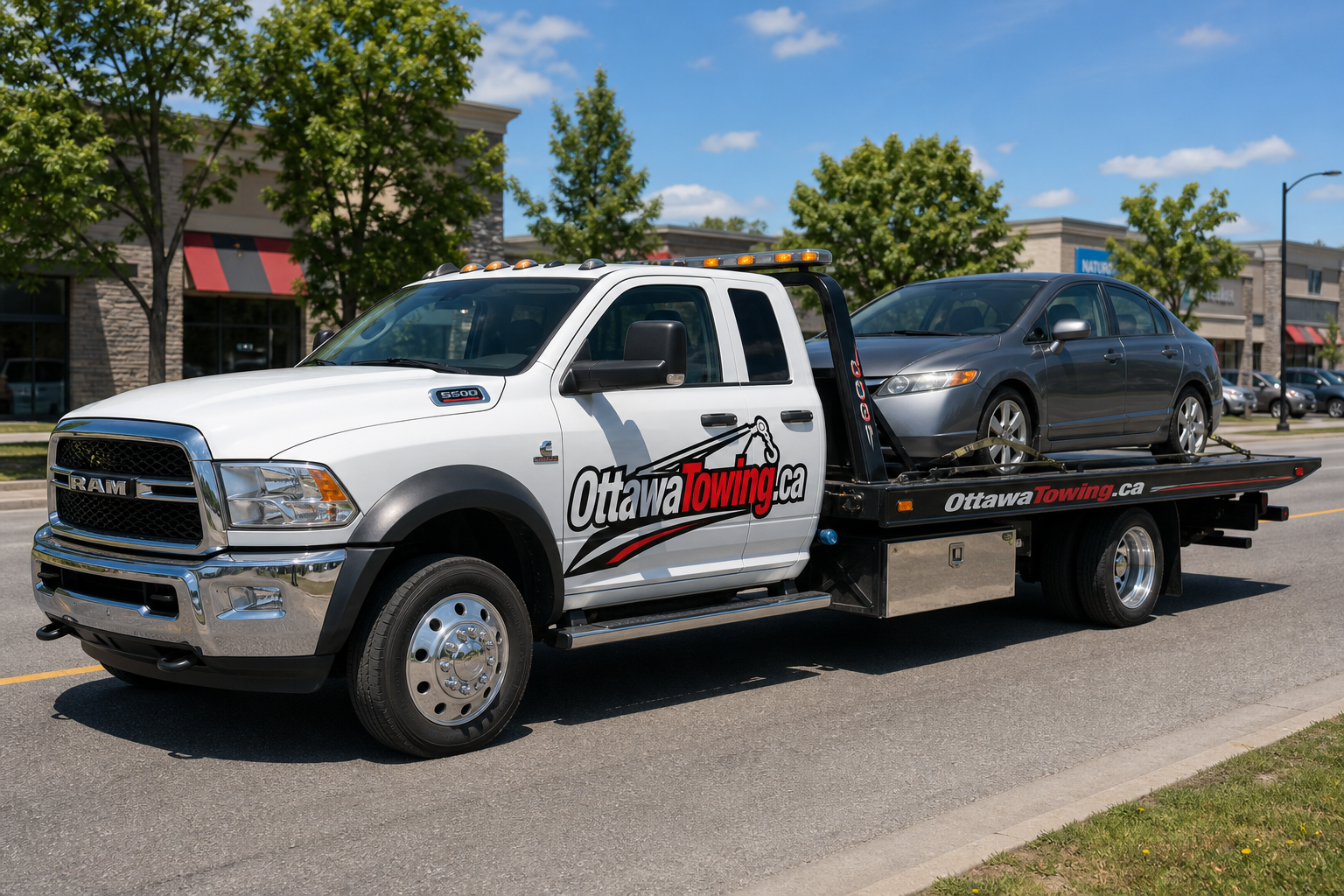
A tow truck call usually starts in a stressful moment. A vehicle will not start, a tire is damaged, traffic is close, a parking garage is tight, or a driver needs help getting a vehicle to a safe place. This guide explains how tow truck service fits real Ottawa roadside situations and how to make the call easier from the first minute.
Ottawa has busy highway shoulders, downtown streets, apartment lots, older neighbourhood roads, suburban plazas, winter snowbanks, and work sites. A good towing service needs more than a truck. It needs clear communication, the right loading method, safe roadside judgement, and a plan for the destination. Ottawa Towing helps drivers with local towing, roadside assistance, flatbed towing, battery boost calls, car lockouts, flat tire help, accident recovery, and vehicle transport across the city.
The main goal is simple: protect people first, protect the vehicle second, and get the next step moving without confusion. If you need help now, call 613 975 7575. If you are comparing options, use this guide to understand what matters before a tow truck is sent.
Tow Truck Basics for Ottawa Drivers
The phrase tow truck can mean several types of help. Some calls need a standard local tow. Some need a flatbed tow truck because the vehicle has all-wheel drive, low clearance, wheel damage, or collision damage. Some calls do not need a full tow at all; roadside assistance may solve a dead battery, lockout, or tire issue where the vehicle is parked.
For Ottawa drivers, the best service choice depends on three facts: where the vehicle is, what condition it is in, and where it has to go. A vehicle on Highway 417 needs a different safety plan than a vehicle in a condo garage. A car with a dead battery in a driveway needs different help than a vehicle with a broken wheel after a crash. The dispatcher can guide the next step, but accurate details make the response smoother.
- Location: nearest address, intersection, highway exit, business name, lot entrance, garage level, or landmark.
- Vehicle: make, model, drivetrain if known, visible damage, wheel condition, and load status for work vehicles.
- Problem: no start, flat tire, lockout, collision, stuck vehicle, warning lights, smoke, leaking fluid, or steering trouble.
- Destination: repair shop, home, dealership, storage lot, workplace, or another safe drop-off point.
Tow Truck Near Me: Why the Closest Option Is Not Always the Best Option
Many drivers search for tow truck near me because they want fast help. Speed matters, but the closest listing is not always the right choice. The right towing company should be able to handle the vehicle type, reach the pickup point safely, communicate clearly, and send the correct truck for the job.
For example, a damaged SUV may need careful loading. A low-clearance car may need flatbed towing. A work van may need more space and a clear route for pickup. A vehicle in an underground garage may need height clearance details before the driver arrives. A cheap towing Ottawa search can help compare price, but the lowest price is not useful if the wrong equipment causes delays or damage.
A strong towing Ottawa call starts with a calm description. Say where you are, what happened, if the vehicle starts, if it rolls, if the tires are intact, and where it should go. That gives dispatch enough information to match the call to the right service.
Tow Truck Service Ottawa: What Happens After You Call
After you call Ottawa Towing, the first step is to confirm the pickup point. This is especially important in Ottawa because many locations have similar street names, large shopping plazas, multiple garage entrances, and busy roadways with limited stopping areas. A precise location helps reduce phone calls and search time.
Next, the dispatcher needs to understand the vehicle condition. A vehicle that starts but should not be driven may still need towing. A vehicle that does not roll may need special loading. A car stuck in snow or mud may need recovery before transport. A lockout with a child, pet, or safety concern inside the vehicle should be treated as urgent.
Once the service type is clear, the destination should be confirmed. If the destination is a repair shop, check that it is open or that after-hours key drop is available. If the destination is home, make sure there is room for the vehicle. If the destination is a dealership or storage lot, confirm the exact entrance.
Roadside Assistance: When a Full Tow May Not Be Needed
Roadside assistance can save time when the vehicle can be handled safely in place. Common examples include a battery boost, flat tire help, lockout support, and basic roadside assessment. The key word is safely. If the vehicle is near fast traffic, on a narrow shoulder, inside a blind curve, or in poor visibility, safety may matter more than trying to fix the issue on site.
Battery boost calls are common in Ottawa, especially during cold weather and after long parking periods. A dead battery often shows up as dim lights, clicking, or no crank. Flat tire calls are common on busy roads and in parking lots. Lockout calls often happen in plazas, driveways, workplaces, and apartment lots. In each case, share the details before help is sent so the driver can prepare.
If the vehicle has smoke, leaking fluid, severe tire damage, brake trouble, steering issues, or collision damage, ask for towing service instead of trying to keep driving. Driving a damaged vehicle can turn a small repair into a larger problem.
Towing Service Costs: How to Think About Price Without Guessing
Towing cost depends on the service type, distance, access, vehicle condition, time, and equipment needed. A short local tow from a driveway is not the same as recovery from a ditch. A flatbed tow can be different from a basic local transport. A vehicle in a tight garage may take more planning than a vehicle in an open lot.
Price matters, and drivers should ask clear questions before approving service. Ask what details are needed for an estimate, if the destination affects the price, and if special loading or recovery changes the service. Good information protects both the driver and the towing company because the work is clearer before the truck arrives.
| Factor | Why it matters |
|---|---|
| Distance | Longer towing usually takes more time and fuel. |
| Vehicle condition | Damaged wheels, locked steering, or no-roll conditions can change loading. |
| Access | Garages, narrow lots, snowbanks, and blocked lanes can slow pickup. |
| Service type | Battery boost, lockout, local tow, flatbed transport, and recovery are different jobs. |
Ottawa Safety Steps Before the Tow Truck Arrives
Safety comes before the vehicle. If the vehicle is close to moving traffic, move yourself and passengers to a safer location if you can. Turn on hazard lights if it is safe. At night, stay visible and avoid standing on the traffic side of the vehicle. During winter storms, stay warm, keep your phone charged, and describe snow, ice, or access issues during the call.
On highways and ramps, never stand between traffic and your vehicle. If there is a barrier and it is safe to move behind it, do so. If the vehicle is blocking a live lane or people are hurt, call emergency services first. Towing can wait until life safety is handled.
In parking lots and garages, stay aware of other drivers. Use landmarks such as the nearest store entrance, level number, pillar label, gate code, or lot name. These details help the tow truck driver find you faster.
How This Applies to Ottawa
Ottawa calls often come down to access and timing. Some Ottawa areas have dense parking, heavy commuter traffic, narrow side streets, construction zones, and busy plazas. A call for dispatch details should include the closest cross street and a simple note about the vehicle position.
If the vehicle is in a private lot, apartment building, business property, or underground garage, tell dispatch about clearance signs, locked gates, tight corners, or posted rules. If the vehicle is near a school, hospital, construction zone, or event area, mention that too. The more direct your description is, the easier it is to plan the pickup.
Internal Resources From Ottawa Towing
These pages can help you choose the right service before calling, but do not delay if the vehicle is unsafe or blocking traffic.
- Tow Truck Service in Ottawa
- Roadside Assistance
- Emergency Towing
- Ottawa Service Areas
- Ottawa Towing Home
Related Ottawa Towing Guides
These related guides cover nearby towing questions, roadside decisions, and service details for Ottawa drivers.
- Towing for No-Start Vehicles in Ottawa
- Tow Truck Service for Company Fleet Vehicles in Ottawa
- Vehicle Recovery From Ditches and Soft Shoulders in Ottawa
Road and Safety Resources to Check
For broader road information, drivers can also check official Ontario, federal, and City of Ottawa resources. Use them for general road, traffic, and safety context, then call Ottawa Towing if your vehicle needs roadside help or transport.
- Ontario 511 road conditions
- Ontario driving and roads information
- Transport Canada road safety information
- City of Ottawa traffic services
Quick Checklist Before Calling Ottawa Towing
- Move people to the safest available place.
- Confirm the pickup location with a landmark or intersection.
- Describe the vehicle and the problem in plain words.
- Say if the vehicle starts, rolls, steers, or has visible damage.
- Choose a destination before the tow starts if possible.
- Keep your phone available in case the driver needs final directions.
Conclusion: A Better Tow Truck Call Starts With Clear Details
A good tow truck service is not only about moving a vehicle. It is about making a stressful roadside problem safer, clearer, and easier to handle. Ottawa drivers searching for tow truck service, tow truck service, Ottawa towing, roadside assistance, towing service, towing Ottawa, cheap towing Ottawa, tow truck service Ottawa, or towing companies in Ottawa usually need the same thing: clear help from a local team that can handle the situation properly.
Ottawa Towing is licensed and insured, serves Ottawa drivers day and night, and helps with local towing, emergency towing, flatbed towing, roadside assistance, battery boosts, lockouts, flat tires, accident recovery, winching, heavy towing, and vehicle transport. Share the details, stay safe, and get help started.